


Data Engineering vs Data Science: Where are the opportunities in 2026
Data Engineering vs Data Science: Core Differences at a Glance
Before examining the specific tooling and workflows of each discipline, review the side-by-side comparison below to understand how these roles function across the organizational data lifecycle:
| Dimension | Data Engineering | Data Science |
|---|---|---|
| Core Focus | Practical application of data collection, processing, and integration; building underlying systems and pipelines. | Extracting actionable insights and strategic value from processed data using statistical techniques and algorithms. |
| Primary Goal | Ensure data is accessible, clean, reliable, properly formatted, and securely stored for analysis. | Discover patterns, perform statistical inference, develop predictive models, and support decision-making. |
| Key Responsibilities | ETL/ELT pipeline creation, database architecture, data governance, data security, data cleaning, system performance. | Exploratory data analysis (EDA), statistical modeling, descriptive analysis, machine learning deployment, business communication. |
| Core Technical Skills | Software engineering, database architecture, distributed computing, pipeline orchestration, cloud systems. | Advanced statistics, probability, linear algebra, machine learning, data visualization, domain knowledge. |
| Primary Output | Scalable infrastructure, reliable data pipelines, clean data warehouses, optimized data structures. | Predictive models, analytical reports, automated business recommendations, visual dashboards. |
The Function of Data Engineering
Data engineering focuses on the practical application of data collection, data processing, and data integration. Professionals in this role design, construct, install, test, and maintain highly scalable data management systems. They build the underlying infrastructure that ensures data is accessible, reliable, and properly formatted for analysis.
This involves constructing data pipelines that manage complex data flows—extracting information from various source systems, transforming it through the Extract, Transform, Load (ETL) process, and loading it into storage solutions such as data warehouses or data lakes. The data integration process includes moving, cleaning, and preparing data from disparate sources, ensuring consistency and quality through rigorous validation and the application of enterprise business rules.
Data transformation is essential because raw data is often messy, inconsistent, and unsuitable for analysis. Data cleaning addresses critical quality issues like duplicate records, missing values, and inconsistent formatting. Ensuring data quality is vital because every business decision, operational insight, and automated action is only as reliable as the underlying data supporting it.
Data governance and data security maintain trustworthy, secure data pipelines while adhering to internal organizational policies and external regulations. Data modeling serves as an important architectural aspect, involving the design and visual representation of data structures to organize business concepts, relationships, and operational constraints.
Data storage solutions, including enterprise data warehousing, optimize for scale, performance, cost, and specific query access patterns. Modern data systems enable efficient data access, allowing organizations to retrieve and utilize data across various platforms and operational use cases. Data flows describe the continuous, automated movement of data from initial ingestion through transformation and storage, supporting timely analytics and reporting.
Ultimately, data preparation cleans, transforms, and organizes raw inputs. Data engineers directly support data analysts, data scientists, and business leadership teams by converting raw data into structured, usable datasets that drive actionable business intelligence.
Skills and Tools Required for Data Engineers
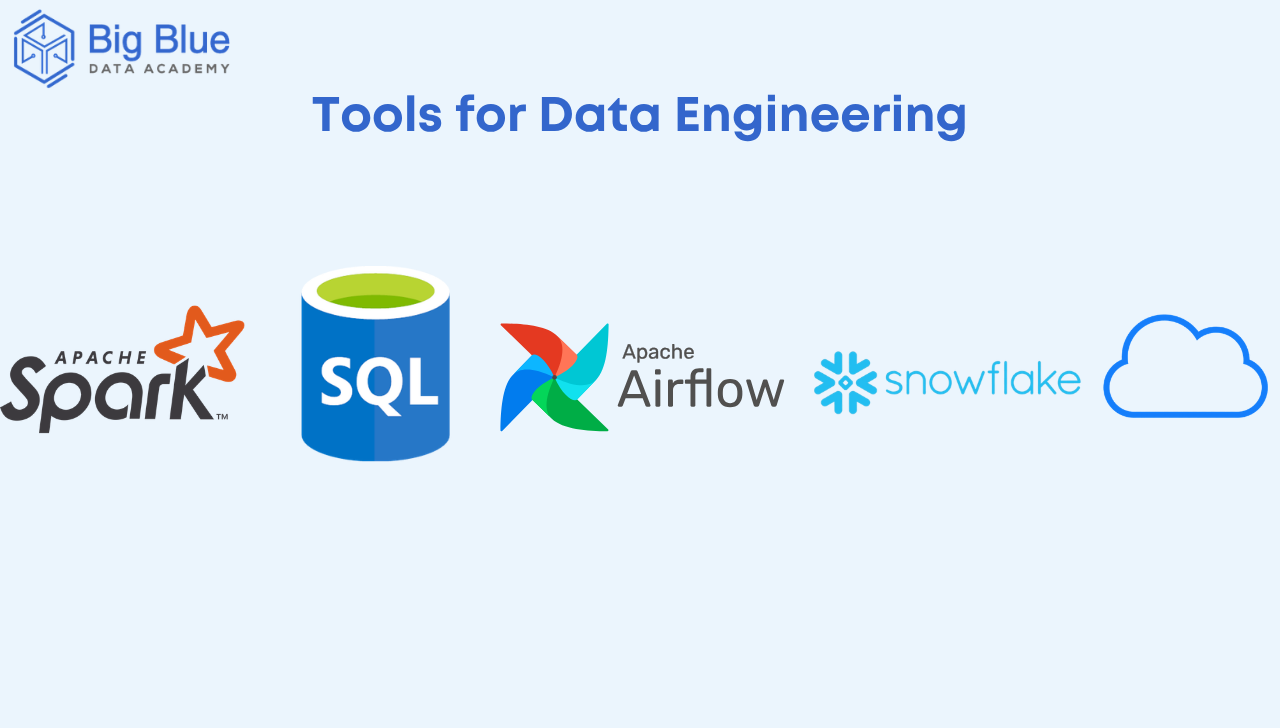
A career in data engineering requires a strong foundation in software engineering, computational logic, and database architecture. Proficiency in programming languages such as Python is necessary for writing complex, automated data processing scripts. A deep understanding of data structures is essential for optimizing memory usage, handling high-throughput pipelines, and improving system processing speeds.
Data engineers must possess deep expertise in Structured Query Language (SQL) for querying and managing relational databases like PostgreSQL and MySQL. They also need hands-on experience with NoSQL databases, including MongoDB and Cassandra, to manage unstructured and semi-structured datasets efficiently. Familiarity with big data processing frameworks such as Apache Spark, Apache Hadoop, and Apache Kafka is crucial for handling high-volume real-time streams and distributed computing workloads.
Furthermore, data engineers utilize cloud computing platforms like Amazon Web Services (AWS), Google Cloud Platform (GCP), and Microsoft Azure to deploy and manage scalable infrastructure. Cloud computing enables affordable, scalable storage, elastic compute capacities, and managed distributed systems necessary for executing large-scale distributed data pipelines. Cloud infrastructure forms the modern backbone of enterprise data management, storage, and deployment solutions.
Data engineers work daily with distributed data systems, platform architectures, and database management solutions to build and optimize scalable infrastructure for efficient storage, processing, and retrieval across diverse workflows. Experience with orchestration platforms such as Apache Airflow is required to schedule, automate, and monitor continuous data pipelines. Additionally, proficiency in containerization platforms like Docker and container orchestration tools is mandatory for deploying consistent environments across development and production settings.
The Function of Data Analysis and Data Science
Data Science involves extracting actionable insights from processed data through advanced analytical and computational techniques. Organizations implement data science projects for operational process optimization, task automation, and customer personalization systems. Data scientists work across structured and unstructured datasets to extract quantitative insights and support high-level business objectives.
Data mining serves as a primary method for discovering non-trivial patterns and relationships within massive datasets. Exploratory data analysis (EDA) is a fundamental activity for understanding raw variables before building formal models; it relies heavily on statistical inference and descriptive data visualization techniques. The ability to interpret complex data accurately is crucial for informing executive decisions and deriving strategic business value.
Descriptive analysis helps organizations evaluate current and historical performance trends through statistical summaries and visual metrics. Data scientists apply principles from statistics, mathematics, and computer science to analyze complex datasets and spot numerical trends. They develop, train, and deploy predictive models and machine learning algorithms to deliver advanced analytical insights, enable process automation, and forecast future business outcomes.
The strategic integration of artificial intelligence in data science supports advanced analytics and decision automation across various market sectors. Business intelligence and business analytics form integral components of this ecosystem, enabling data preparation, data mining, and visualization for data-driven strategies. While data analytics focuses primarily on interpreting historical data to answer specific operational questions, data scientists focus on building generalized mathematical models to predict future events.
The standard data science workflow typically follows a structured sequence: exploring structured data provided by data engineers, selecting appropriate mathematical modeling techniques, training models on historical inputs, and evaluating model accuracy and bias against performance metrics. The final stage requires translating technical findings into clear business context for non-technical stakeholders to support executive planning.
Skills and Tools Required for Data Scientists
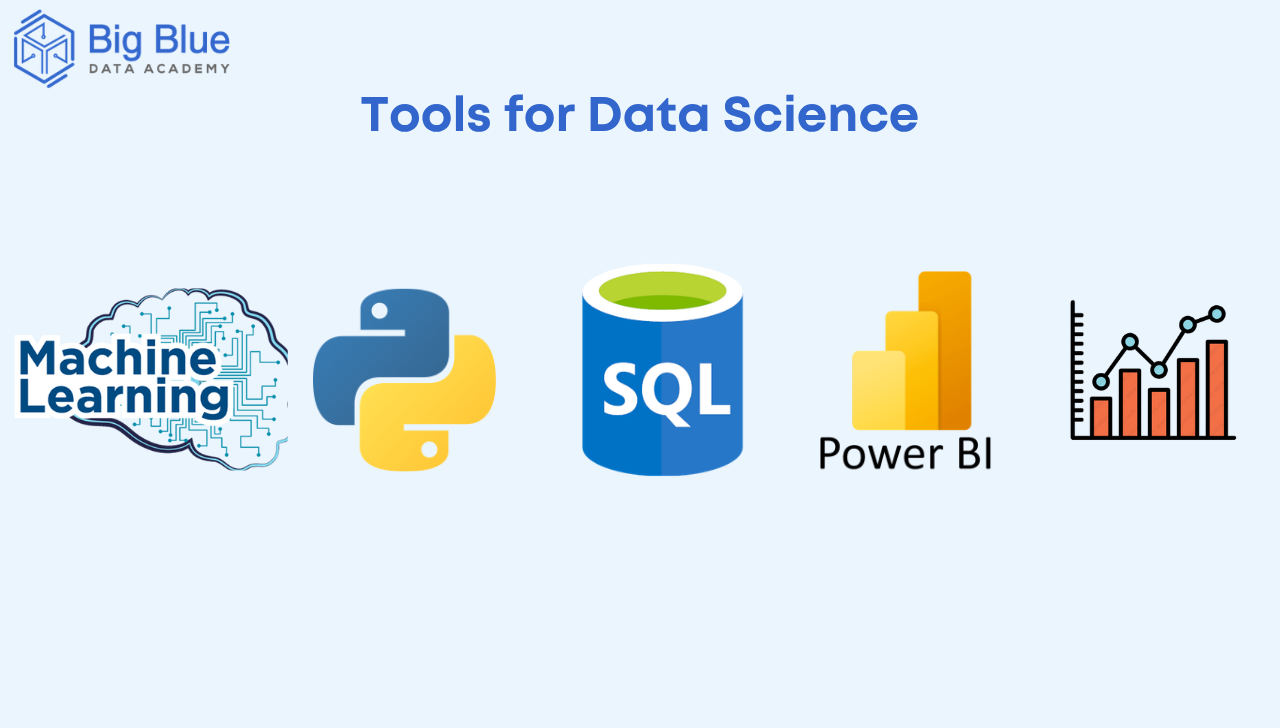
Data scientists require advanced mathematical knowledge in statistics, probability, and linear algebra to design valid algorithms and test statistical hypothesis power. Programming proficiency is essential, with Python and R serving as standard industry languages for statistical computing, scientific research, and data manipulation.
Data science tools—encompassing both open-source frameworks and enterprise platforms—are widely used for advanced analytics, machine learning development, and scalable data evaluation. Practitioners utilize specialized libraries like Pandas and NumPy for numerical arrays, alongside computational frameworks such as Scikit-learn, TensorFlow, and PyTorch to design, train, and validate deep learning and machine learning models.
Data visualization is another mandatory capability. Scientists rely on visualization software like Tableau, Looker, and Power BI, alongside Python libraries like Matplotlib and Seaborn, to communicate mathematical conclusions clearly through intuitive dashboards and figures. This helps non-technical stakeholders understand analytical insights quickly.
Data scientists frequently work with unstructured data (such as raw text or image collections in data lakes) that lacks a rigid predefined schema. Data preparation remains a foundational task, requiring data cleaning, transformation, and feature engineering to ensure datasets yield accurate modeling performance. Data scientists must also understand data modeling fundamentals—including dimensional modeling (Star and Snowflake schemas) and managing Slowly Changing Dimensions (SCDs)—to collaborate effectively with data teams and maintain dataset interoperability. Additionally, data scientists rely on a solid working knowledge of SQL to directly query operational data warehouses and build customized analytical subsets for local experimentation.
Current Market Demand and Career Opportunities in Both Fields
The market demand for both data engineering and data science professionals remains high across modern industries. However, the exact career opportunities, hiring dynamics, and specialization requirements exhibit clear differences across both disciplines.
Educational Pathways and Salary Benchmarks
To become a data engineer, most candidates complete an educational background in computer science, software engineering, or a related quantitative field—with candidates holding either bachelor's or master's degrees. Many professionals begin in entry-level analyst roles to gain experience evaluating data structures before transitioning into engineering roles. Understanding core data engineering principles is essential: these foundational concepts form the building blocks that transform unorganized data into structured, accessible information for enterprise analytics and AI initiatives.
Data engineering is projected as a top growth job through 2030. In the United States, the average base salary for data engineers sits at $106,966 per year, with senior platform specialists and cloud architects commanding higher total compensation packages.
Data Engineering Growth Drivers
Demand for data engineers continues to experience rapid growth as organizations realize that machine learning algorithms and predictive analytics models cannot function without robust data pipelines. Companies actively hire engineers to unify fragmented data sources and execute cloud migrations to modern storage platforms.
This focus on data architecture has created a high volume of job openings for roles centered on cloud system design, database administration, and pipeline automation. Data engineering is essential because it makes operational data reliable, verified, and accessible. Technical skill in this field must be paired with the ability to explain complex technical architecture in business terms to executive stakeholders.
Modern data engineering has evolved from legacy batch processing to dynamic real-time streaming architectures. Engineers supply data scientists with reliable access to tools, storage, and platform computing. They also implement automated monitoring and observability tooling—such as Monte Carlo or Great Expectations—to track data freshness, volume anomalies, and schema shifts continuously. Cross-functional collaboration between data engineers, data scientists, and machine learning engineers (MLEs) is critical for deploying artificial intelligence solutions at scale.
Data Science Specialization and Strategic Fit
Conversely, job opportunities within data science are becoming increasingly specialized. While generalist roles remain relevant, modern hiring trends heavily favor professionals with domain-specific technical expertise in areas like Natural Language Processing (NLP), Computer Vision, or Deep Learning. Organizations seek specialists who can deploy predictive models directly into production environments to generate measurable economic returns.
Choosing between these two career options depends on individual technical interests:
- Select Data Engineering if you: Excel at software programming, database architecture, infrastructure automation, distributed systems, and backend optimization.
- Select Data Science if you: Excel at applied mathematics, statistical inference, algorithmic modeling, quantitative analysis, and conveying analytical findings to business leaders.
Both disciplines remain foundational components of technology teams and offer stable, long-term career growth.
Frequently Asked Questions
Q: How can someone effectively transition into a career as a Data Engineer or a Data Scientist?
A: The most direct path into either role is through hands-on, practical training provided by intensive bootcamps like Big Blue Data Academy. These structured programs focus on industry-standard tools, enterprise data pipelines, real-world datasets, and production projects, equipping students with technical skills required by hiring teams within a focused timeframe.
Q: Which field currently offers the most immediate employment opportunities for new professionals?
A: Data Engineering currently exhibits a higher volume of immediate entry and mid-level job openings as enterprises prioritize building cloud data infrastructure. However, both fields offer long-term career growth for candidates who demonstrate practical technical proficiency in managing, transforming, and modeling large datasets.
Q: Is a specific university degree mandatory to work in the data industry?
A: A specific university degree in computer science is not mandatory. Employers prioritize verifiable technical execution, practical problem-solving capability, and concrete project experience. Candidates can establish competency by completing a professional bootcamp, developing public code repositories, and showcasing end-to-end data pipelines or machine learning projects in a technical portfolio.
.jpg)


