


How to Land a Data Analytics Entry Level Job in Greece
Search for junior data roles on LinkedIn, and you will notice a common roadblock: "Junior Data Analyst – 3+ years of experience required." It is a frustrating barrier that makes entering the industry feel out of reach.
In the Greek tech landscape, that 3-year requirement functions as a preliminary filter rather than a strict rule. Hiring managers at Athens startups, Thessaloniki tech hubs, and corporate firms are not looking for a specific timestamp on your CV, they want evidence of practical execution.
Companies face growing volumes of unstructured data, outdated dashboards, and complex operational questions that standard spreadsheets cannot address. To secure an entry-level data analytics role, you do not need a three-year head start, you need a targeted portfolio and a clear analytical workflow. Shifting your focus from "years served" to "problems solved" transforms a career-switcher into a job-ready asset on Day 1.
What Does a Data Analyst Actually Do?
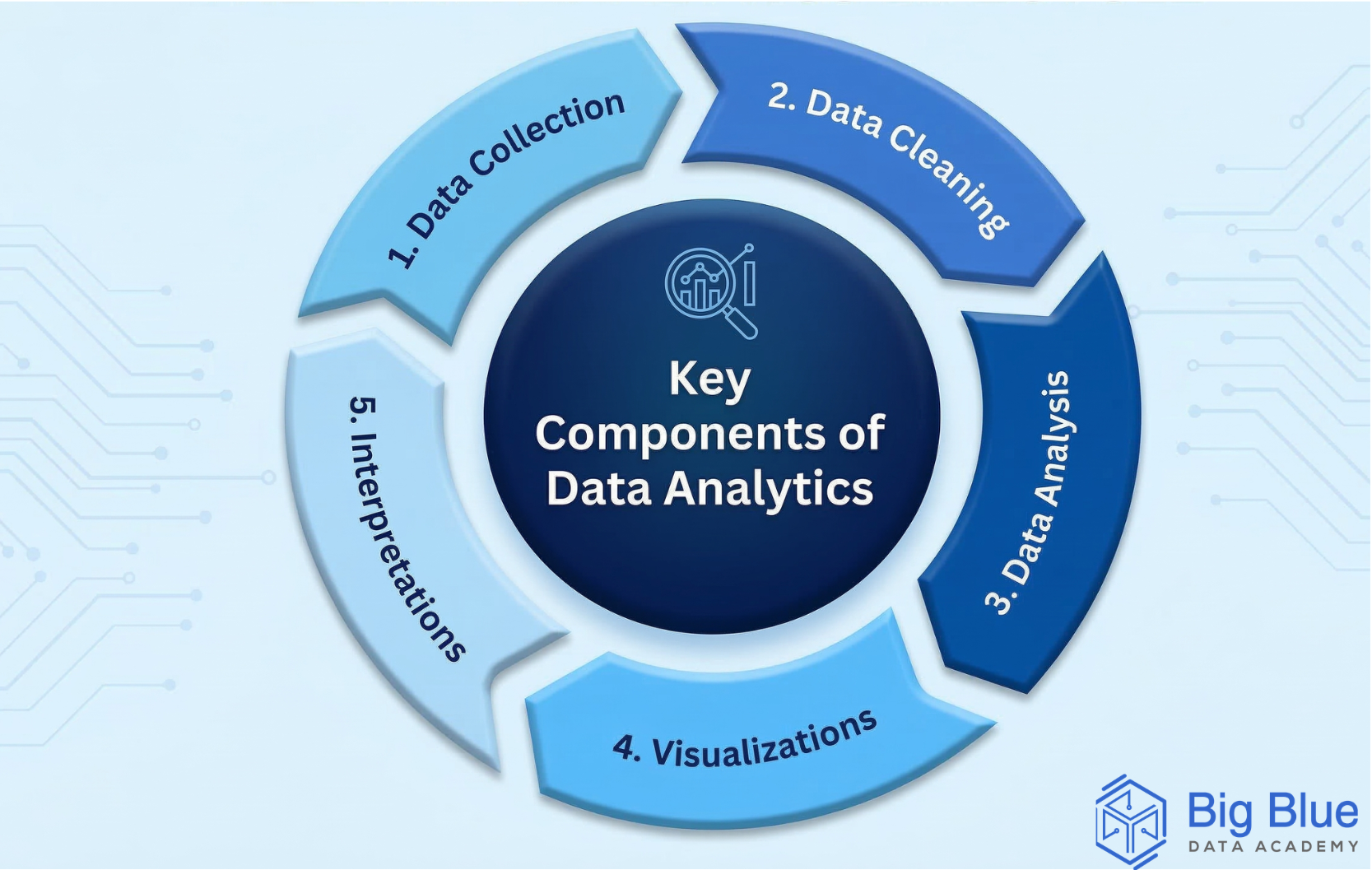
Data analytics professionals serve as strategic translators between raw information and business growth. They extract structured insights from unstructured data to guide commercial decisions. While daily operations involve tools like Excel, SQL, and Python, the core deliverable is not just a script or a spreadsheet—it is a clear path toward faster, evidence-based decision-making.
By identifying hidden patterns and validating key metrics, analysts help companies replace guesswork with data-backed strategies. Their work optimizes marketing spend, streamlines operations, and clarifies customer behavior across diverse sectors in Greece, including finance, shipping, healthcare, e-commerce, and logistics.
The Professional Workflow: From Raw Data to Actionable Insights
The daily responsibilities of a data analyst follow a structured 5-step data lifecycle:
- Collecting and Organizing Data: Gathering raw records from disparate databases, CRM platforms, transaction logs, or web analytics to establish a consolidated view of operations.
- Cleaning and Preparing Datasets: Raw business data contains formatting errors, missing values, and duplicates. Analysts dedicate significant time to validating datasets so their analysis rests on accurate foundations.
- Identifying Trends and Patterns: Applying exploratory data analysis (EDA) techniques to uncover operational bottlenecks or unexpected growth opportunities.
- Creating Dashboards and Visualizations: Translating quantitative findings into visual reports using platforms like Power BI or Tableau. These dashboards provide interactive, real-time tracking for department leads.
- Communicating Insights to Business Teams: Translating technical outputs into plain, accessible language so executive teams can execute strategic changes that drive measurable ROI.
The 4 Core Types of Data Analytics
Commercial data projects rely on four fundamental analytical approaches, depending on the business question at hand:
| Analytics Type | Focus Area | Primary Business Question | Practical Example |
|---|---|---|---|
| Descriptive | Historical Performance | "What happened?" | Summarizing quarterly e-commerce sales performance across Greek regions. |
| Diagnostic | Root-Cause Evaluation | "Why did it happen?" | Identifying why online user drop-off increased during checkout step 2. |
| Predictive | Pattern Forecasting | "What is likely to happen?" | Estimating warehouse inventory demand ahead of seasonal sales spikes. |
| Prescriptive | Strategic Guidance | "What action should we take?" | Recommending specific product pricing tiers to increase overall profit margins. |
The "Big Three" in Data Analytics: Building a Professional Tech Stack
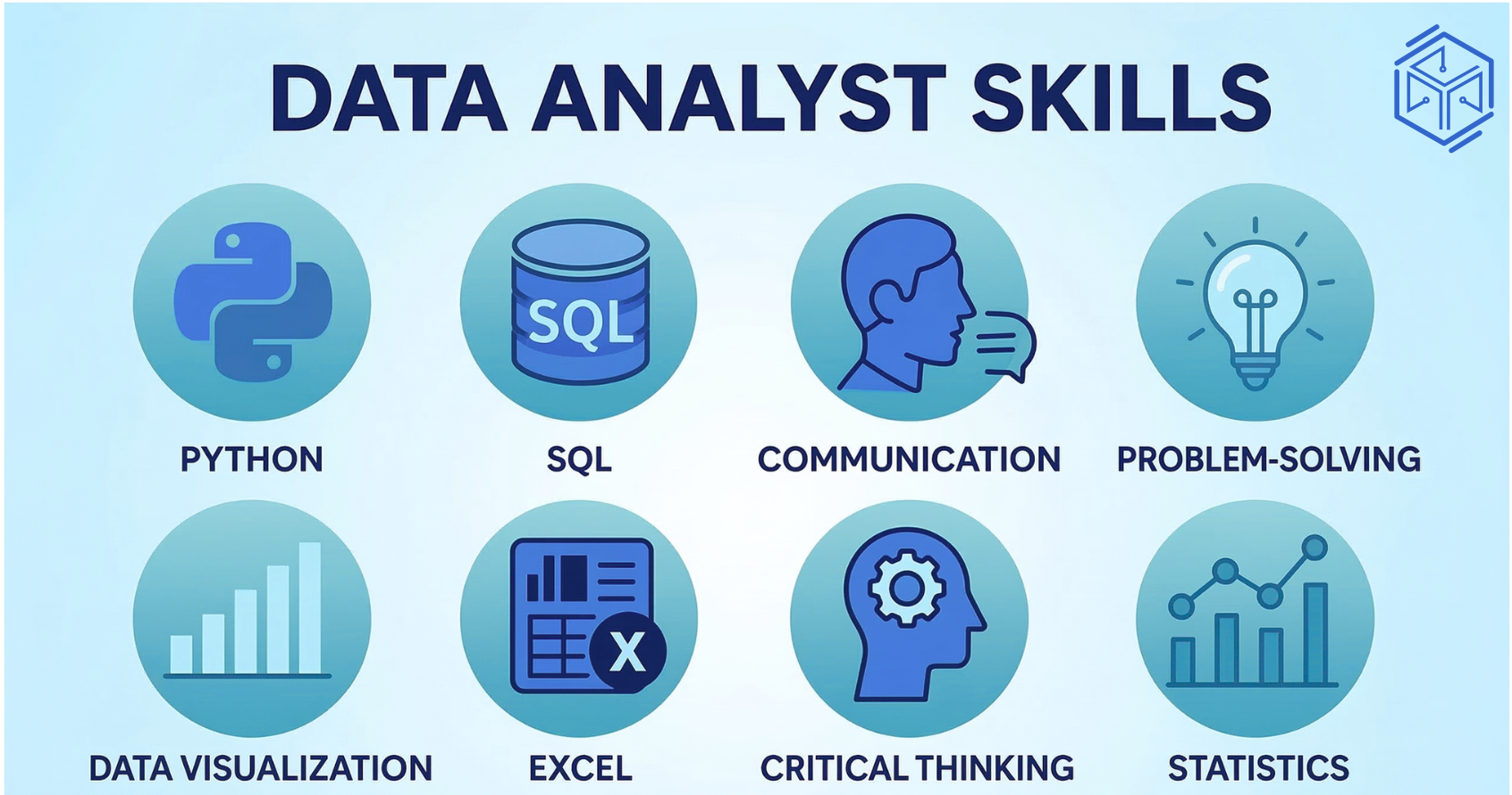
While the data ecosystem features hundreds of specialized tools, employers in Greece focus heavily on candidates who have mastered a core "Big Three" technical stack. These tools form the pipeline through which raw data moves from database extraction to final presentation.
1. Advanced Excel: The Business Baseline
Excel remains an essential operational tool across Greek small and medium enterprises (SMEs). Standard data entry skills are insufficient for modern roles. Employers look for proficiency in Pivot Tables for rapid data aggregation, advanced lookup functions (XLOOKUP, INDEX/MATCH) for combining data across sheets, and Power Query workflows to automate repetitive data cleaning on large files.
2. SQL: Database Querying and Retrieval
SQL (Structured Query Language) is a critical technical requirement for analytics positions. Because company data is stored in relational databases, SQL is required to extract and transform data directly. Junior candidates must demonstrate fluency in multi-table JOIN operations, filtering, grouping, aggregate calculations, and subqueries—the primary focus of technical screening interviews.
3. Data Visualization Tools: Power BI & Tableau
Analytical conclusions require clear visual delivery to influence business strategy. Business Intelligence platforms like Power BI (widely deployed across Greek enterprise environments) and Tableau enable analysts to replace static spreadsheets with dynamic dashboards. Stakeholders can filter these reports by region, date range, or product segment to review live performance metrics.
How to Start with Data Analytics (Even with Zero Experience)
Option 1: Self-Directed Learning (The Independent Route)
Learning independently through online documentation, open video courses, and platforms like Kaggle provides complete schedule control at minimal financial cost.
- Pros: Low monetary expense, fully flexible schedule.
- Cons: Lacks structured feedback, direct code reviews, or guidance when overcoming technical roadblocks.
Option 2: Intensive Bootcamp Training (The Accelerated Track)
Enrolling in an intensive data analytics bootcamp compresses training into a practical schedule focused on job-ready skills. When selecting a training program, evaluate these key elements:
- Practice-Heavy Curriculum: A ratio of ~25% theory and 75% practical exercises.
- Core Technology Focus: Applied training in Python, SQL, and Power BI/Tableau.
- Real-World Case Studies: Assignments utilizing complex datasets modeled after real business operations.
- Portfolio Outputs: Completed projects that showcase end-to-end analytical capability to recruiters.
For an intensive fast track, Big Blue Data Academy's 14-Week Data Analytics & AI Bootcamp combines 280 hours of hands-on training with AI-assisted learning (via Sophie AI), Python-Excel integration, advanced SQL querying, and real-world business challenges.
If you prefer an in-person academic experience in Athens, the Professional Diploma in Business Analytics & AI—offered in collaboration with Deree - The American College of Greece—combines structured academic fundamentals with practical corporate case studies.
How to Set Yourself Apart: Your Portfolio is Your New Resume
To differentiate your application in the job market, you must show technical capability paired with commercial thinking. High-performing analysts prioritize data integrity through thorough cleaning, document their analytical logic clearly, and communicate results in plain business language.
When you lack formal job titles on your CV, your GitHub portfolio provides concrete proof of your skills. Host your repositories online with clean code, clear README documentation, and live links to interactive dashboards. Structure your portfolio around these key project types:
- End-to-End Data Cleaning Project: Document how you process and format a dirty public dataset using Python, SQL, or Power Query. (Example: Cleaning and structuring raw public transit logs from OASA or municipal records).
- Interactive BI Dashboard: Build a Power BI or Tableau report tracking key performance indicators (KPIs) like customer acquisition costs or monthly churn. (Example: Analyzing Athens Airbnb rental rates and seasonal occupancy distributions across neighborhoods).
- Commercial Business Case Study: Document an analysis that tackles a business issue, tests hypotheses, and delivers specific, actionable recommendations.
Navigating the Greek Job Market: Salary Expectations & the "Hidden" Network
Data Analyst Salaries in Greece
Data analytics offers competitive growth potential within the Greek market. Compensation varies depending on experience, skill set, and employer type:
- Entry-Level / Junior Analysts (0–2 years): Gross starting salaries generally range between €18,000 and €24,000 per year at local SMEs. At international corporate hubs, Big Four consultancies, and well-funded tech firms in Athens, entry-level offers typically range from €28,000 to €33,000+ annually.
- Mid to Senior Level Analysts: Experienced analysts earn between €35,000 and €55,000+ annually as they lead complex data infrastructure projects and manage strategic reporting.
Tapping Into the "Hidden" Job Market
Many junior positions in Greece are filled through internal referrals, network connections, and targeted talent pipelines before being published on public job sites. To access these unlisted opportunities:
- Engage with Specialized Talent Pools: Major consulting firms and Greek tech startups source talent directly from specialized academy partner networks. Joining a recognized program presents your candidate profile directly to hiring managers looking for practical skills.
- Utilize Alumni Networks: Structured programs connect you with established alumni working in data roles across Greece. These connections offer insider guidance on hiring requirements and team cultures.
- Focus on Team-Based Skills: Technical ability opens initial doors, but clear communication, critical thinking, and team collaboration frequently tip hiring decisions in favor of job-ready candidates.
The transition from completing tutorials to securing your first role happens when you build real projects. Select a dataset, write your queries, design an interactive dashboard, and share your work.
Greek companies are actively hiring practical data professionals—are you ready to launch your career in data analytics?
.jpg)


